Beyond the highways that cut through farmlands, down winding paths that lead into Amaragori village in West Bengal’s Howrah district, stands the Gajalakshmi temple. Its red walls have been darkened with time.
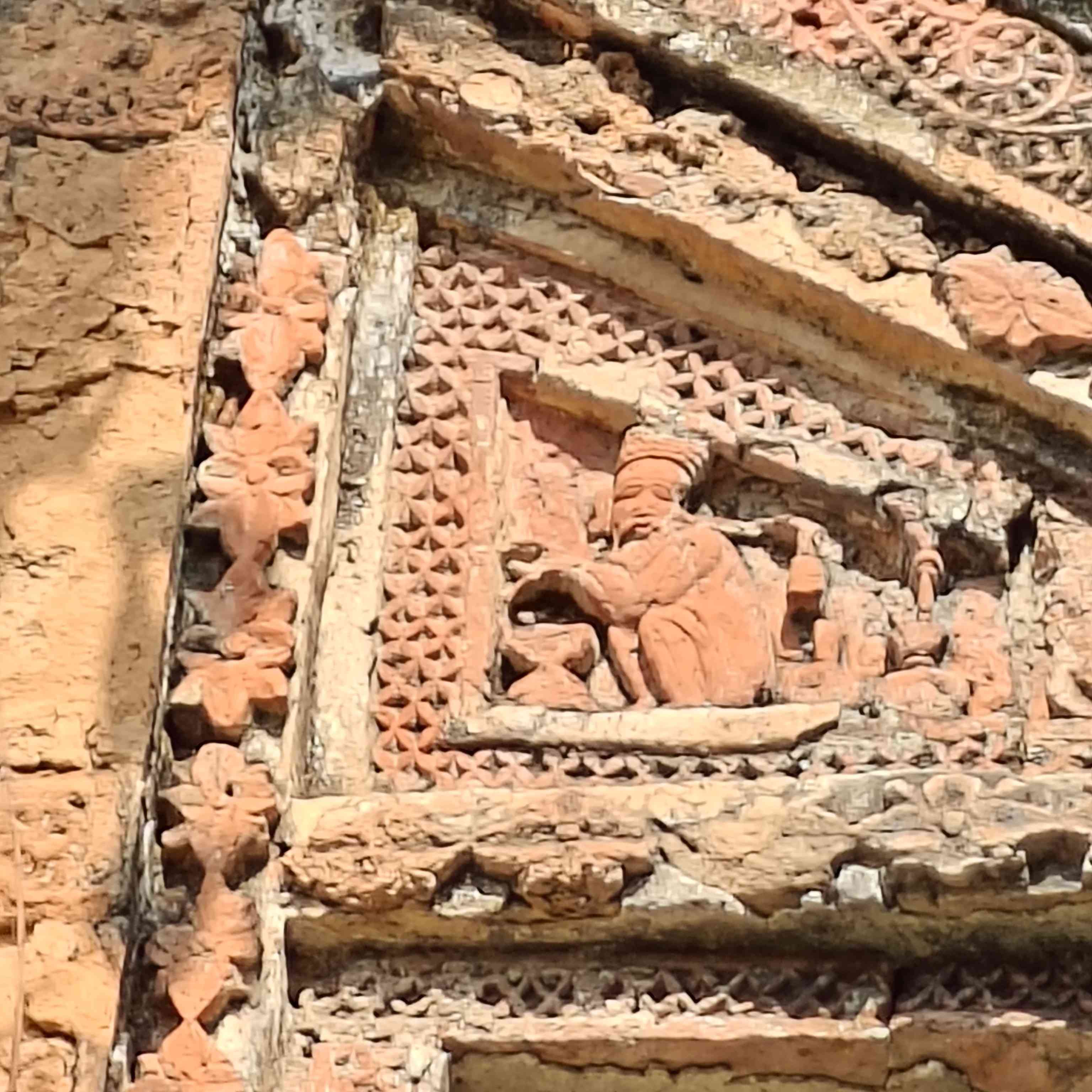
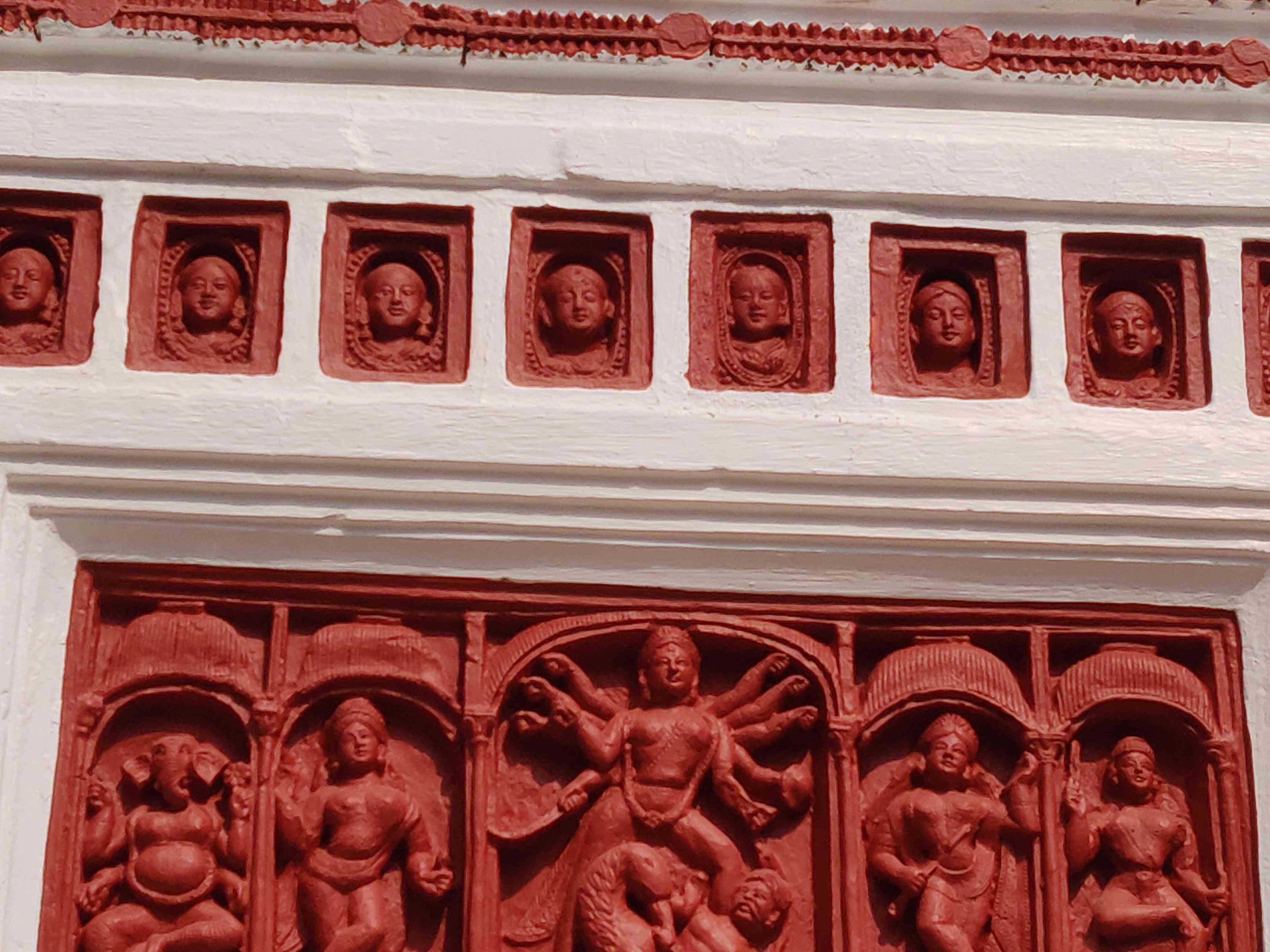
The carvings on its terracotta panels are beginning to recede into the brick. Floral roundels and trellises, a Durga pantheon, rows of birds and men setting out to sea struggle against oblivion. A crouching man stares back at the viewer from one corner panel, inches away from a gaping crack opened up by a tree that now grows out of the temple.
The Gajalakshmi temple was built in 1729 by a wealthy local family, like most of Bengal’s terracotta temples.
Many were built as family shrines by prosperous landed merchants who made their fortunes in the colonial economy of the 18th and 19th centuries. Some of these temples were built by merchants’ guilds.
According to folk art historian Tarapada Santra, there were about 234 such terracotta temples across Howrah district in the 1970s. Many of these quietly moulder away in the neighbouring districts of South Bengal.
They are found in the courtyards of family homes, though the family itself may have scattered or died out. They crop up in the middle of market places, or in lonely spots which once hummed with activity.
At a time when Bengal’s colonial architecture is being rediscovered and explored by research scholars, heritage enthusiasts and cultural organisations, conservation efforts have largely bypassed the terracotta temple, a vital part of Bengal’s built heritage.
The neglect of Bengal’s brick temples is the result of colonial biases that continue to shape the idea of architectural heritage in independent India.
Built mostly between the late-17th and late-19th century, these temples had neither the aura of hoary antiquity nor the prestige of valuable stone to recommend them to foreign Indologists in their construction of India’s past.
With the flight of capital and talents to Calcutta, the metropolis of opportunity and modernity under British rule, the villages of Bengal went into economic decline. In the colonial imagination, the temples were relegated to a pre-modern past that was not worth preserving.
West Bengal’s economic fortunes did not look up after 1947, as the state struggled to deal with the cataclysmic fallout of Partition. For successive state governments, heritage conservation was a luxury and the terracotta temples were not a priority. After all, they were not built by mighty dynasties, nor did they commemorate famous victories or coronations.
As terracotta temples slowly disappear from Bengal, they take with them a slice of the region’s layered cultural history, formed by waves of external influence blending indigenous knowledge. What remains of this storied past must be salvaged.
Texts in terracotta
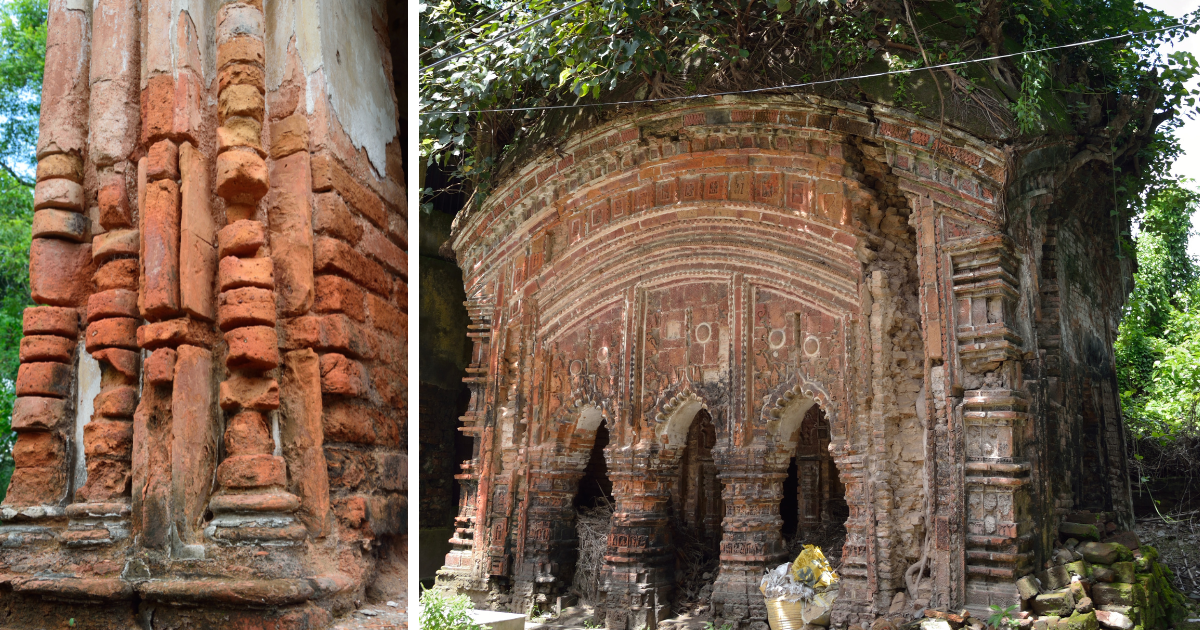
In their choice of material and form, Bengali builders showed remarkable architectural wisdom. The temples are made of brick, bamboo and clay, readily available material in this fertile region. Their roofs replicate the curving slopes (chalas) of thatched village huts, ensuring the easy drainage of rainwater.
A long history of cultural assimilation under Buddhist, Hindu, Muslim and even colonial rule has produced syncretic styles and novel temple forms. The simple charchala (four-sided) structure of the early temples evolved into more complex forms with the passing of time. The chalas multiplied in steps to add height. Sometimes, they were surmounted by ratnas (turrets). Several later temples are flat-roofed, resembling the mansions of the rich in the 19th century, thus reflecting changes in the rural landscape.
Abjuring the use of expensive stone, which had to be brought from other regions, the makers of these temples chose to craft local clay into richly engraved panels. Terracotta, in the hands of unsung village artisans, sings of the religious and quotidian life of the community.
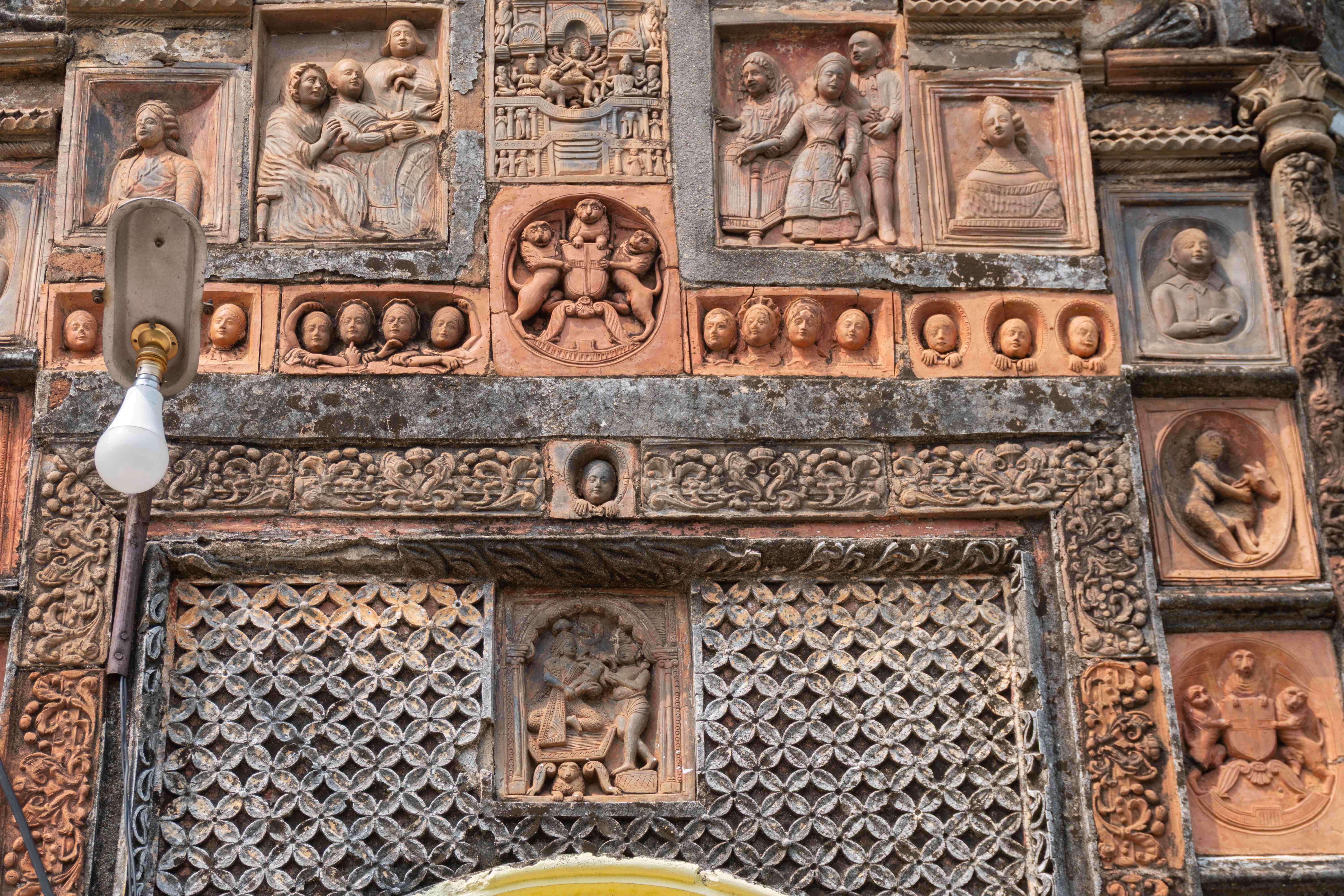
Stories from the Ramayana, the Mahabharata and the life of Krishna jostle for space with folk deities on the terracotta panels. From the 18th century onwards, social scenes and battles scenes from recent historical memory appear on the walls. These temples are also texts in terracotta waiting to be deciphered.
What isn’t ‘Indian art’
Yet, it is this very uniqueness of Bengal’s terracotta temples that has excluded them from the imagination of Indian art. In the quest for a national idiom after Independence, the terracotta temples, built in a regional style long after the major temples in other parts of India, proved to be a disadvantage.
For instance, architect Srishchandra Chatterjee wrote in favour of a School of Indian Architecture and Regional Planning in 1948. He mentioned several schools of Indian architecture but ignored the terracotta temples of Bengal.
Similarly, many Indians have heard the story of the discovery of the Ajanta caves, but only a handful know how scholar David McCutcheon stumbled upon the Chandranath Shiva temple, with European figures on its walls, while accompanying director Satyajit Ray during the shooting of the film, Abhijaan, in Hetampur.
The evolution of the 19th-century Bengal school of art has been researched but studies of the terracotta temple are scarce, stymied by the untimely death of notable field researchers like McCutcheon and folk art historian Tarapada Santra. Otherwise, Mukul Dey’s Birbhum Terracottas, published by the Lalit Kala Academy in 1959, remains a path-breaking compendium.
Poor conservation
Today, a few of the terracotta temples are protected by the Archaeological Survey of India. These include the famous complexes at Bishnupur as well as those in Ambika Kalna and Jaydev Kenduli in Bardhaman district, all built by relatively important local feudatories.
A handful of temples are nominally under the protection of the state’s archaeological department but their maintenance leaves much to be desired. Take the Dadhimadhab temple, built some years after the Gajalakshmi temple in the same village. Carved panels above the entrance to the sanctum, once mentioned in a survey by Santra, appear to have been plastered over.
Social and economic factors also played a part in the destruction of terracotta temples. They were built to signal wealth and influence, but they did not become hubs of economic activity, which meant they faded from community life.

Now abandoned or owned by fragmented families, the structures have been vandalised or engulfed by vegetation which cracks open walls and brings the roof down. In many cases, there are too many stakeholders in the families that own them, leading to deadlocks in decisions over upkeep. Some structures have been razed to the ground as the land they stood on proved more profitable than derelict temples.
Even structures that remain strong are sometimes marred by well-meant but inept attempts at maintenance, with kitsch replacing the original craftsmanship. At several temples in Howrah district, for instance, paint on terracotta panels has blunted the sharpness of the engravings, diminishing the play of light on the panels as the sun changes. Ceramic tiles pave brick plinths and porches, their cold hardness at variance with the earthy warmth of the original brick.
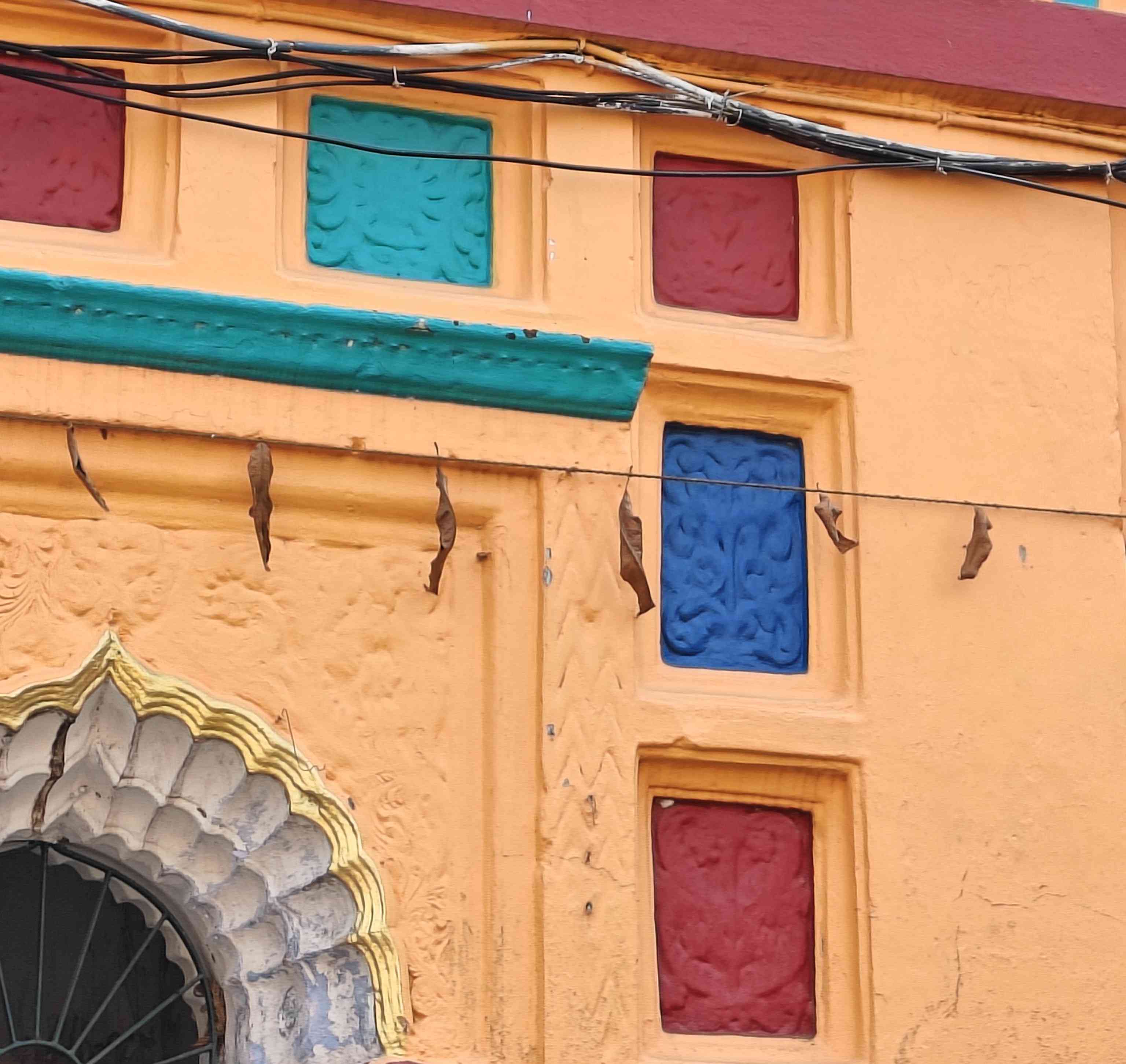
It is the same story across the districts of South Bengal. With no clear advisory on conservation or financial support from the state, owners and local stakeholders have opted for cheap makeovers, resulting in technicolour terracotta and crude workmanship.
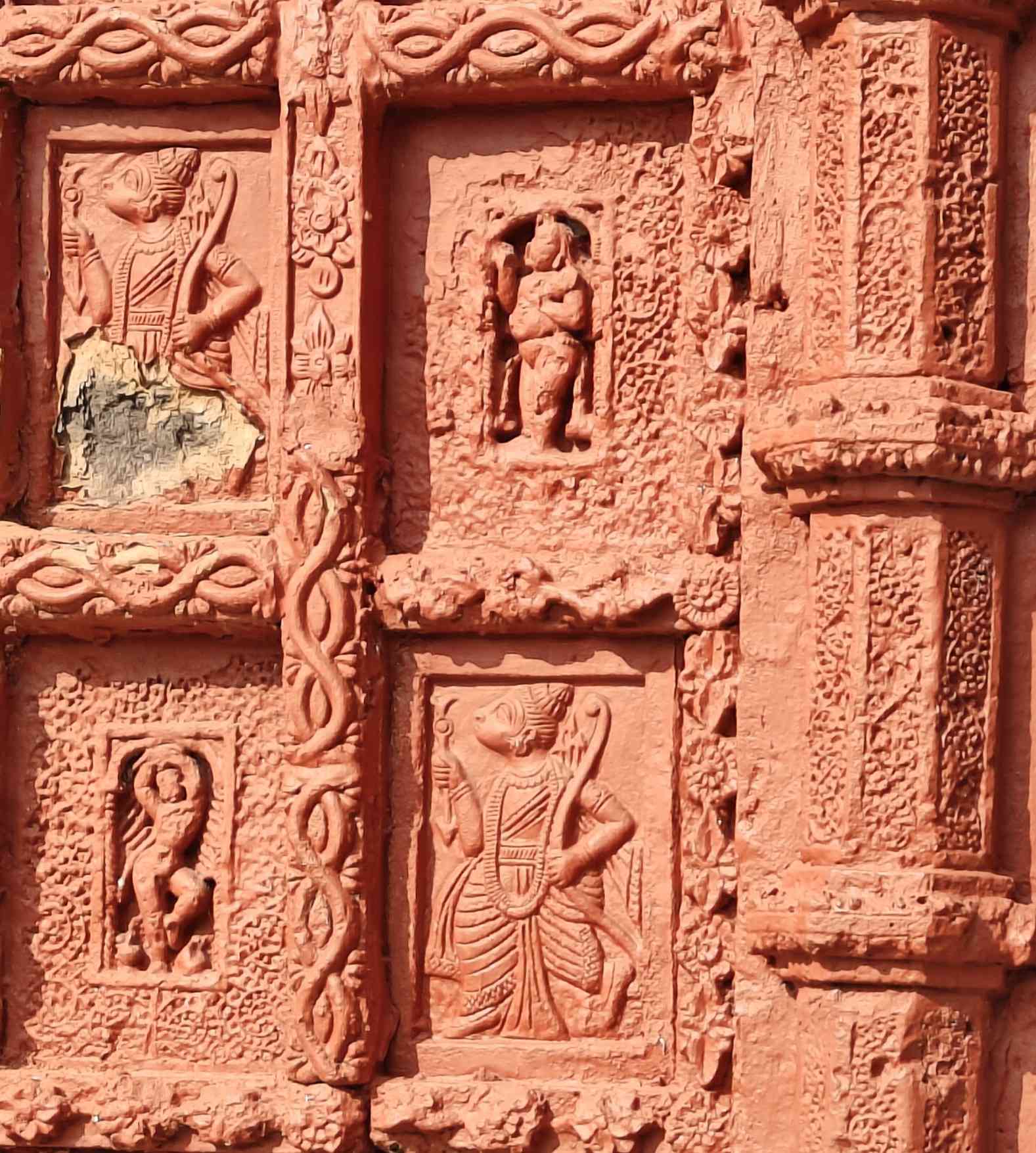
Temples in Howrah’s Rautara village and Birbhum district’s Surul village have been painted red with synthetic colour.
At the Rautara temple, a number of missing panels have been replaced with mass produced terracotta tiles featuring mainly the figure of Hanuman. The dhoti-clad, bow-bearing figure, executed in shallow relief, is a jarring contrast to the naturalness of the primates in the older panels.
Green shoots
In recent years, improved connectivity has brought urban bloggers and terracotta enthusiasts to the temple sites. Many post about them, stoking interest among Kolkata’s middle classes. Organisations such as the Birla Academy of Art and Culture in Kolkata and the Delhi Art Gallery have started conducting tours.
Terracotta enthusiasts from Kolkata have started initiatives to involve local communities in conservation. For instance, Kamal Banerjee, a heritage activist from Kolkata, recounts how community participation helped save terracotta temples in Chamka in West Midnapore district and Joypur in Bankura district. The projects aimed to clear access to the temples and encourage locals to keep them clear of undergrowth. This is a recurrent task, funded by enthusiasts from the city and abroad.
In Chamka, a member of the Nag family, who own the temple, got all stakeholders on board with the project. The temple has now regained prominence with the local community gathering there for festivals.
In Joypur, the temple cleaning was completed just before the outbreak of Covid-19 in 2020. During the lockdown, news reached Banerjee that well-meaning but overzealous local residents were planning to “restore” the temple. The block development officer was contacted and he dissuaded them from going ahead with uninformed conservation and restoration.
If terracotta temples are to survive, they must be linked to the lives and livelihoods of those around them. Few remain centres of religious activity, which has shifted to new, more easily maintained temples. They could, however, generate economic activity. Creative efforts at conservation are urgently needed.
Tourism projects could involve local stakeholders, particularly women, students and indigenous artists. Homestays, local guides, opportunities to taste the local cuisine could be organised in a way that does not disrupt the life of the community but offers livelihoods
Suchandra Chakravarty retired as an associate professor of English from The Bhawanipur Education Society College.
You’ve read Scroll.
Now help sustain it
Scroll is funded by readers, not corporate owners. If you believe our work matters, support our newsroom. Become a member today!
We’re not driven by clicks or corporate interests – just honest, independent reporting. Keep us going. Support Scroll today!